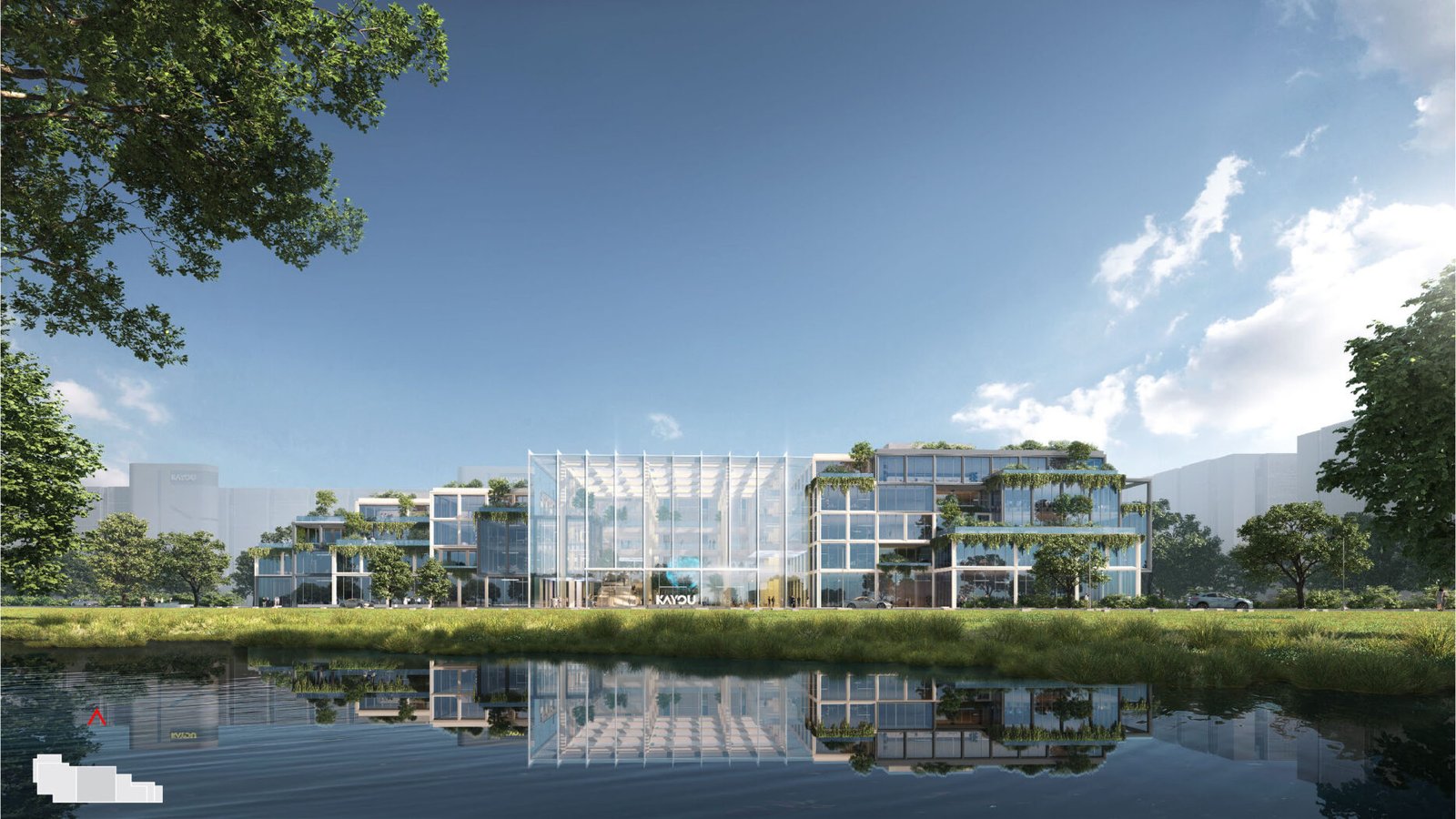
Located in the mountainous landscape of Kaihua County, Zhejiang Province, the Kaihua R&D and Exhibition Center redefines the relationship between architecture and nature. Designed by Woods Bagot as a direct commission for one of the world’s leading collectible card and entertainment IP producers—whose portfolio includes Naruto, Jujutsu Kaisen, Transformers, and Harry Potter—the 20,000-square-meter facility integrates research, creativity, and exhibition under one organic architectural form.
Now at the completion of its Design Development phase, the project serves as the R&D component of the client’s main production base, merging cutting-edge innovation with a deep respect for the natural environment.
A Site Shaped by Nature
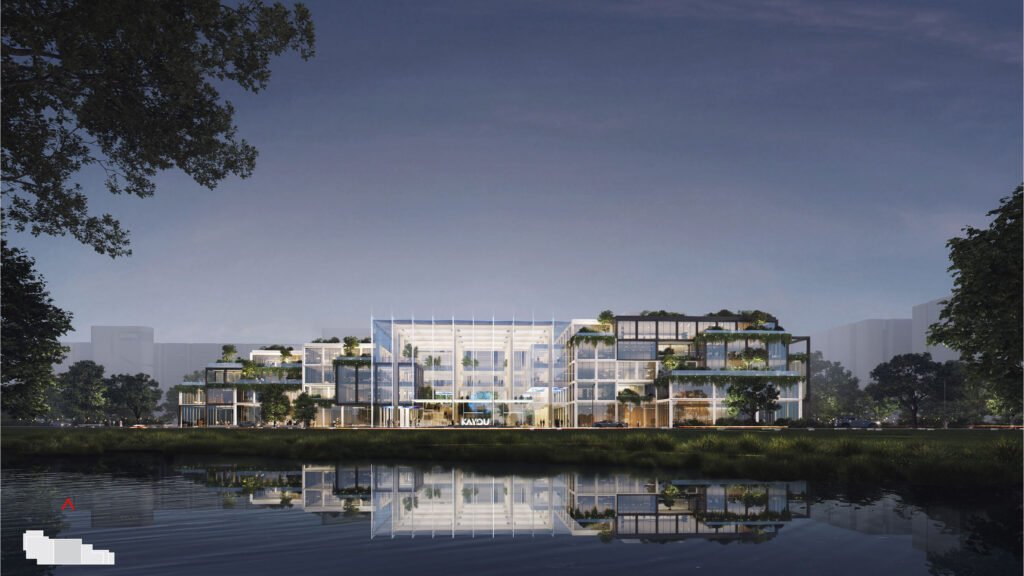
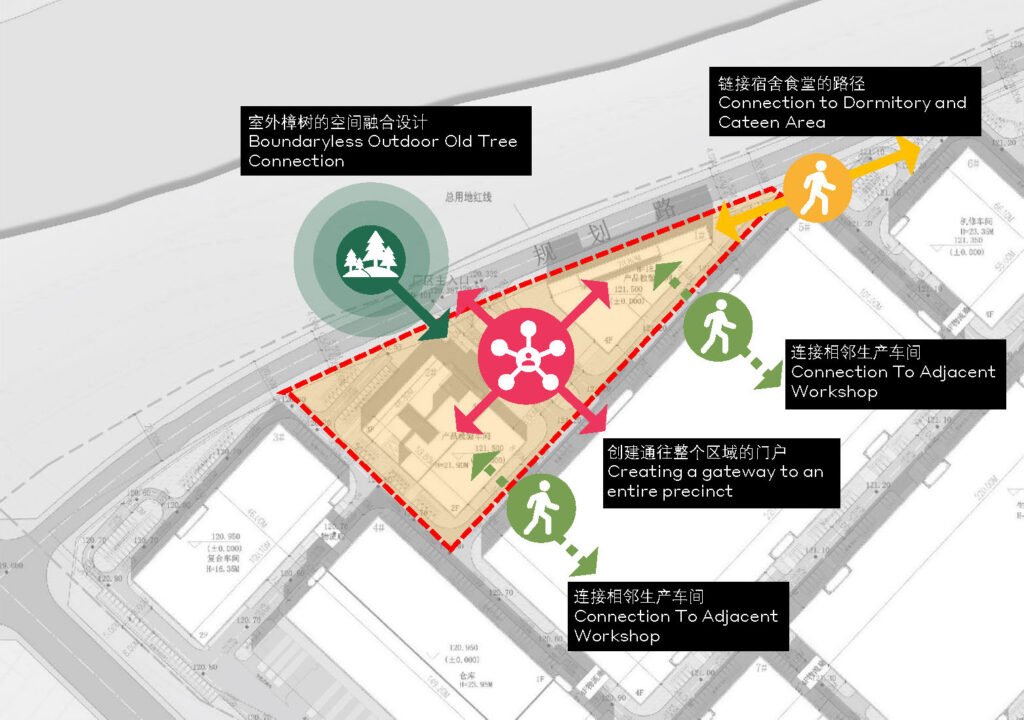
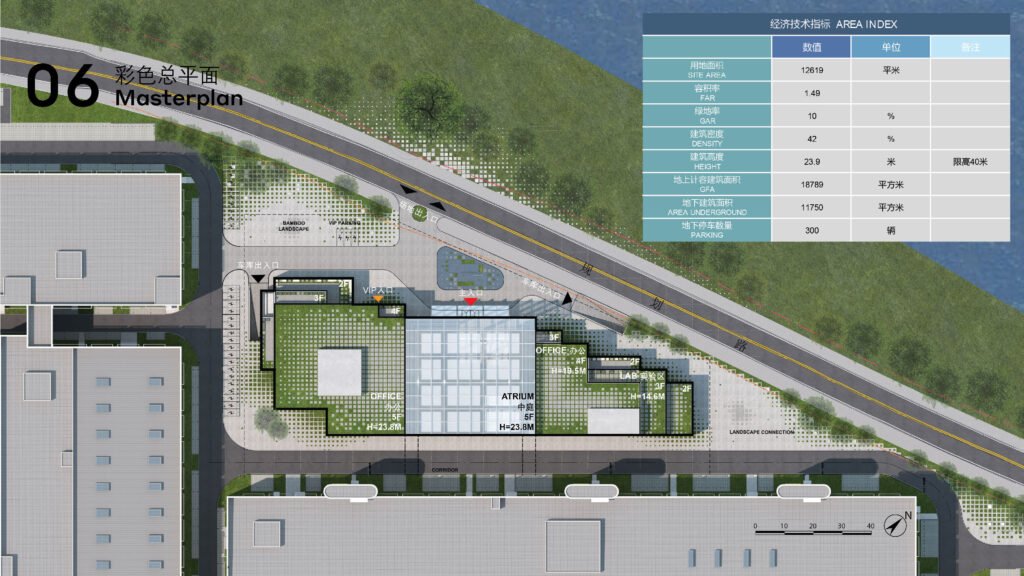
The project sits at the meeting point of Zhejiang, Anhui, and Jiangxi provinces, surrounded by layered mountains, lush forests, and a network of winding creeks. The site’s northern edge borders Majin Creek, while century-old trees opposite the main entrance become a defining part of the design narrative.
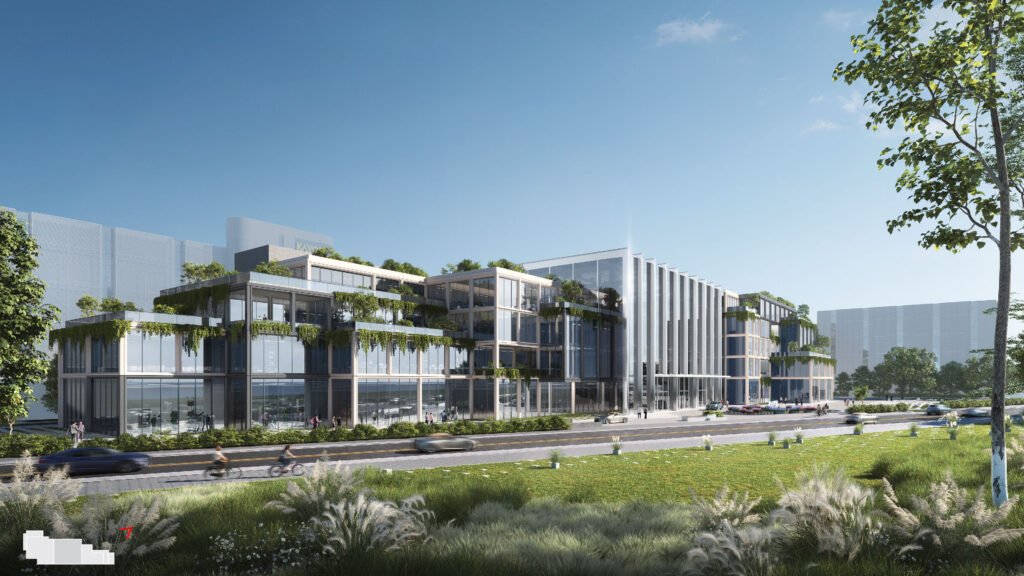
Drawing inspiration from the natural elements of “creek stones, mountains, and trees,” the building’s form follows the site’s topography and echoes the mountain skyline. The shifting volumes appear to have been carved by flowing water, forming a composition of terraces and ridges covered in vegetation. These terraces bring greenery onto every level, softening the structure’s silhouette and giving the impression that the building has grown organically from the earth itself.
Design Concept: Carved by Streams, Rooted in Landscape
The design process began with a poetic abstraction of card imagery—a subtle nod to the client’s core identity as a creative IP producer. Two-dimensional patterns inspired by collectible cards were transformed into modular three-dimensional forms, which were then stacked, eroded, and carved to create a dynamic massing language.
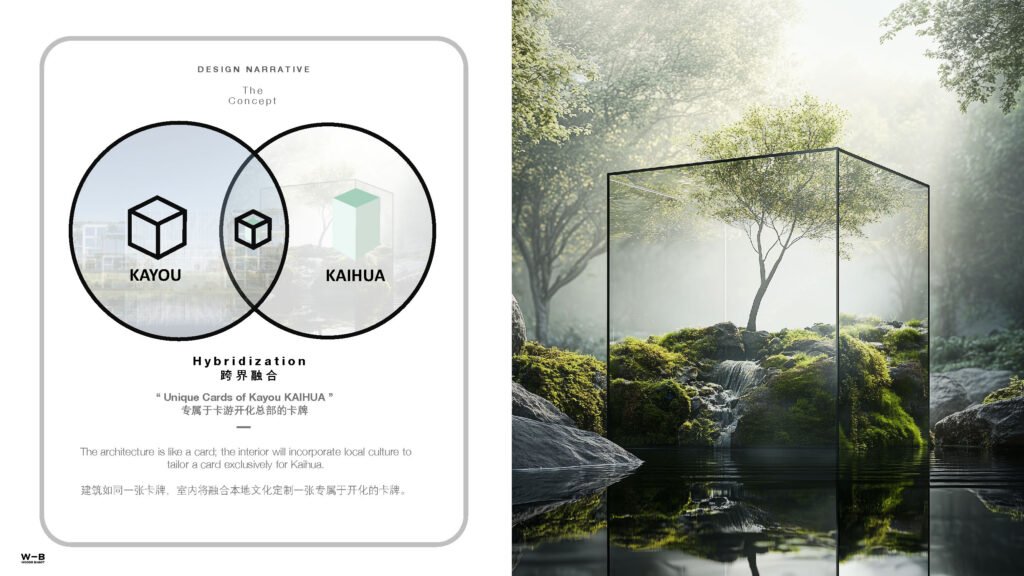
This “carved by streams” design approach gives the building a sense of fluidity and motion, mimicking the natural erosion and layering found in the surrounding geology. Each cut and shift in the form generates outdoor terraces that bring daylight, air, and greenery deep into the building. These terraces serve as outdoor meeting areas and breakout spaces, promoting interaction and well-being among researchers and visitors.
Program and Spatial Experience
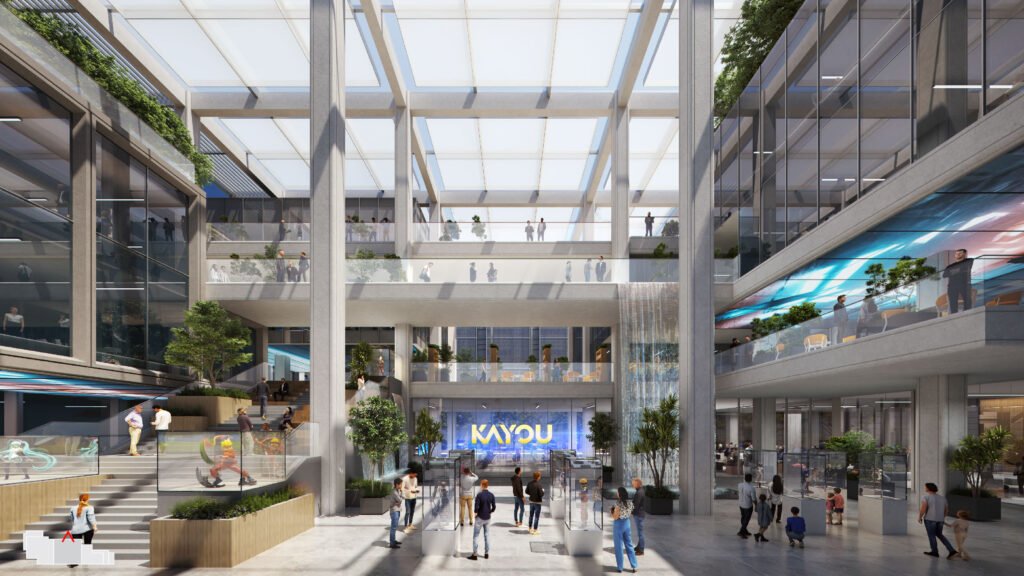
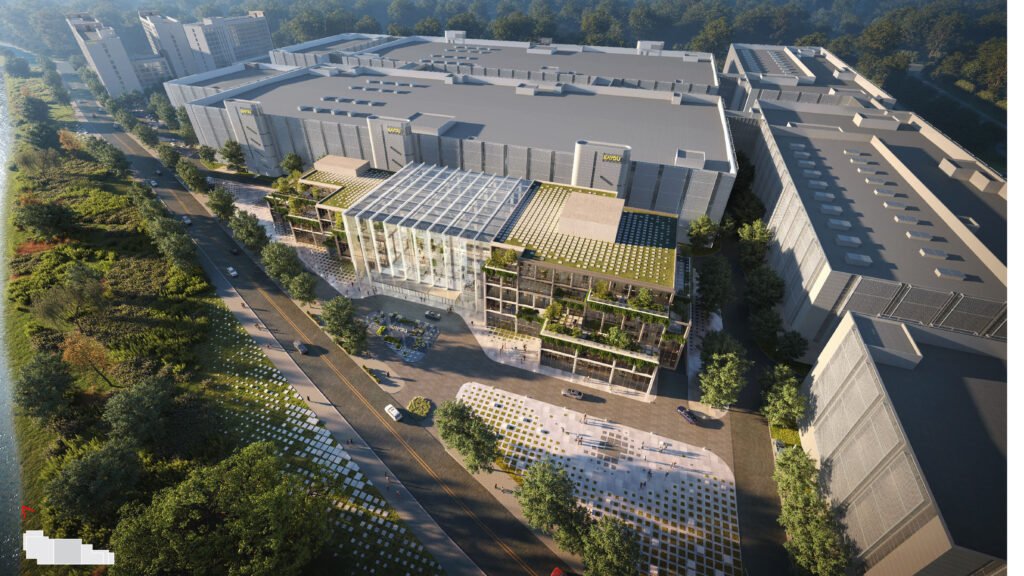
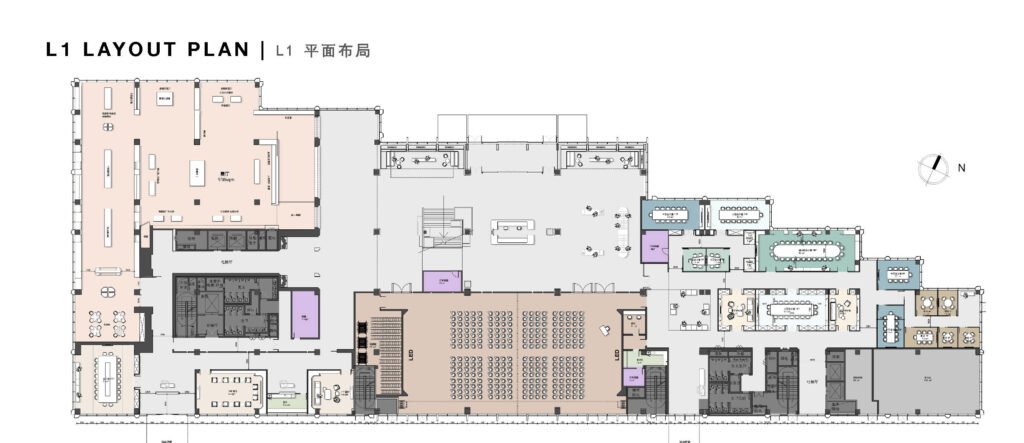
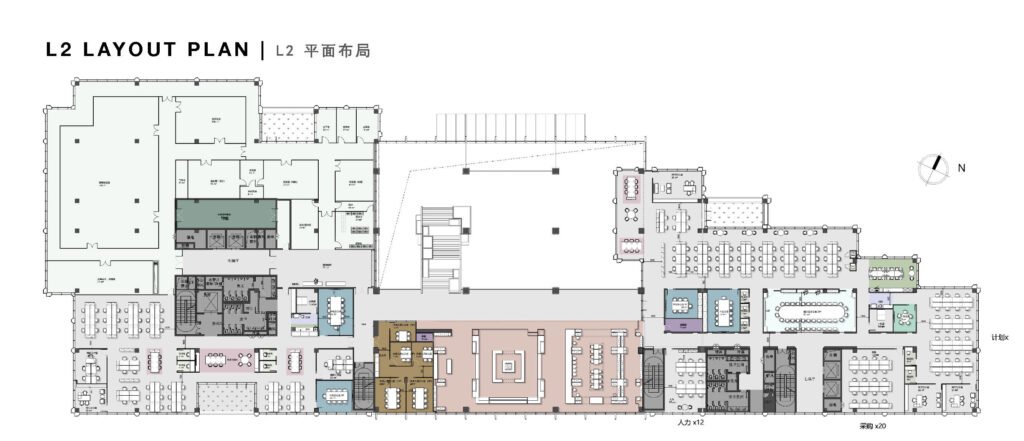
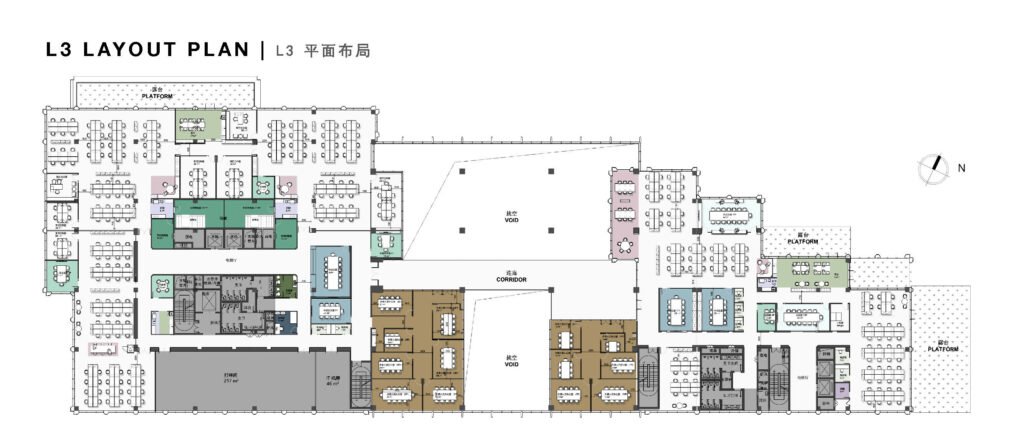
The building houses a diverse mix of R&D laboratories, exhibition areas, offices, and auxiliary spaces, carefully arranged around a central glass atrium that forms the heart of the composition.
- Laboratories and Exhibition Spaces – 4,500 sqm of R&D and display areas, open to visitors and collaborators, showcasing the company’s innovation and craftsmanship.
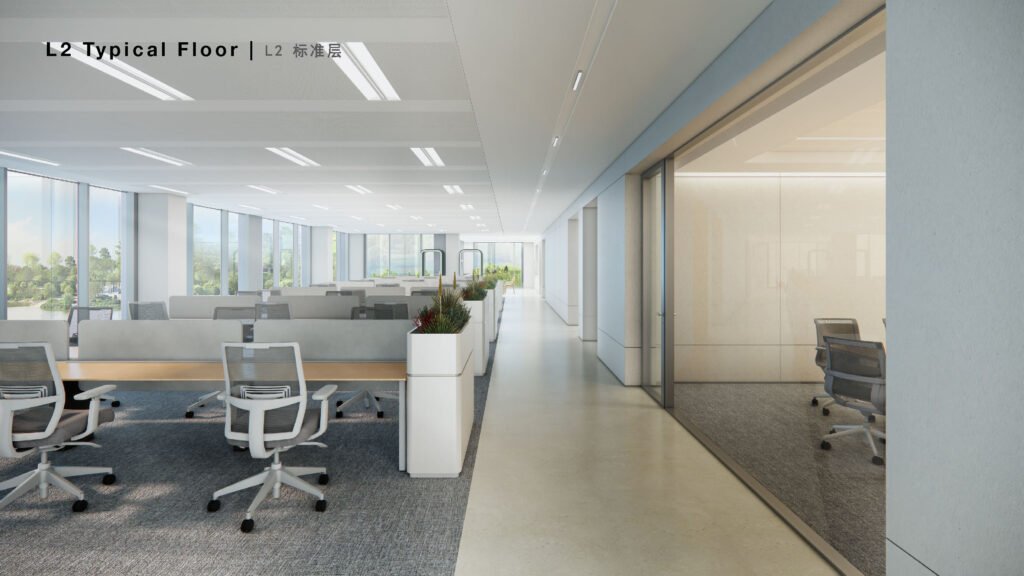
- Offices and Meeting Rooms – 11,000 sqm of flexible workspaces and conference zones designed to support both individual focus and cross-disciplinary collaboration.
- Auxiliary Spaces – 2,680 sqm of amenities and support functions integrated into the landscape.
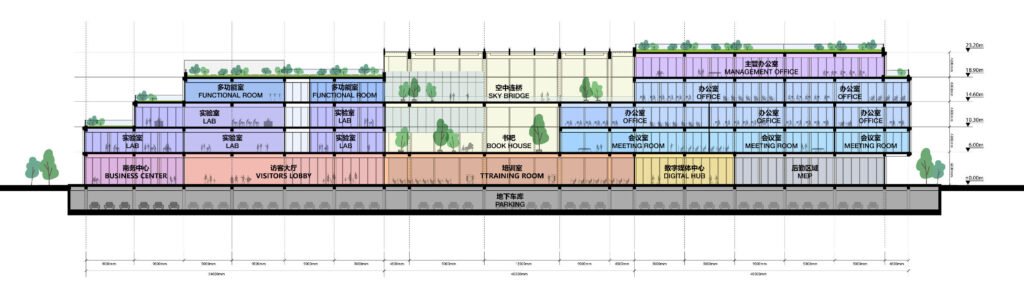
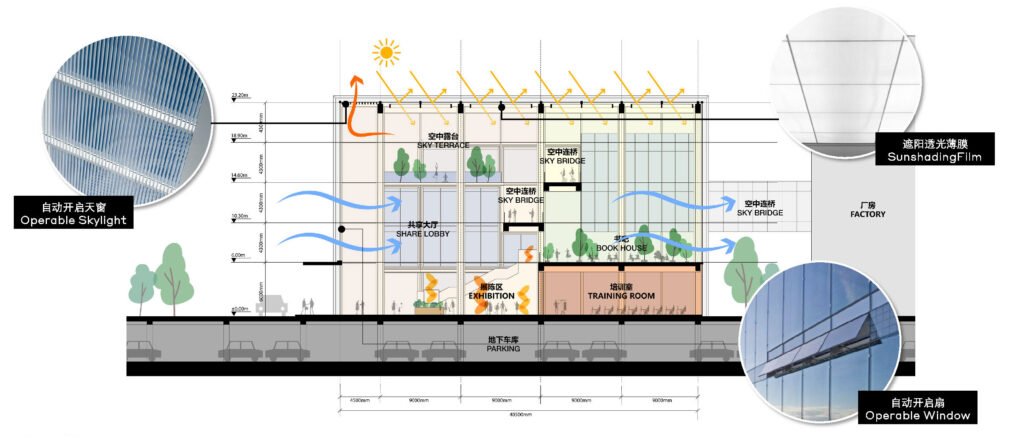
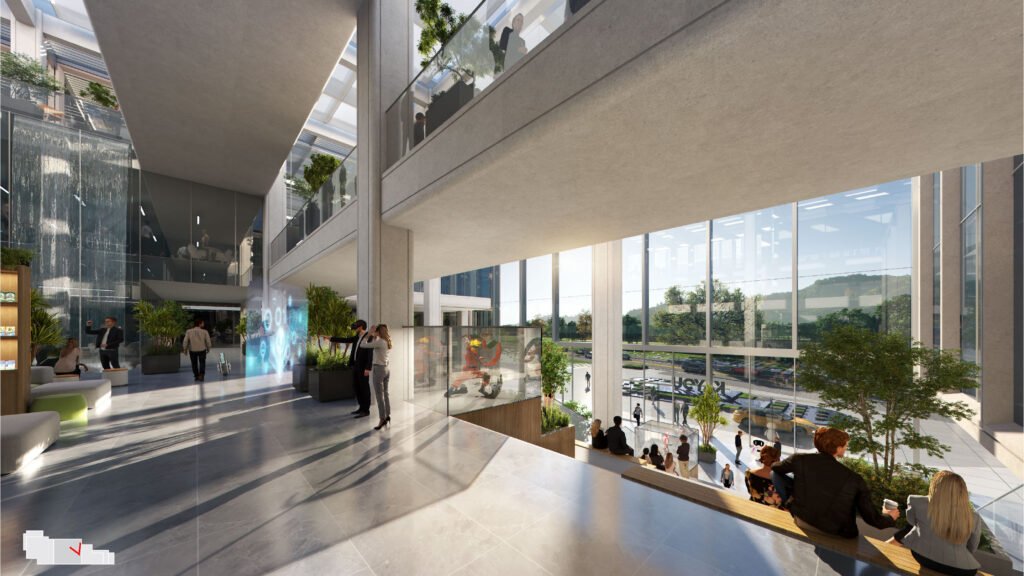
The atrium, positioned along the central axis, acts as both a public gateway and social core. Its metal structural framework glows with a sleek, reflective quality under natural light, reinforcing the company’s high-tech and creative identity. Functionally, it links laboratories and offices while maintaining a clear separation between public and private areas, ensuring efficiency and accessibility.
Materiality and Atmosphere
Natural materials and reflective surfaces create a dialogue between landscape and architecture. The interplay of metal, glass, and stone enhances the contrast between solidity and transparency—between the permanence of the mountains and the lightness of innovation.
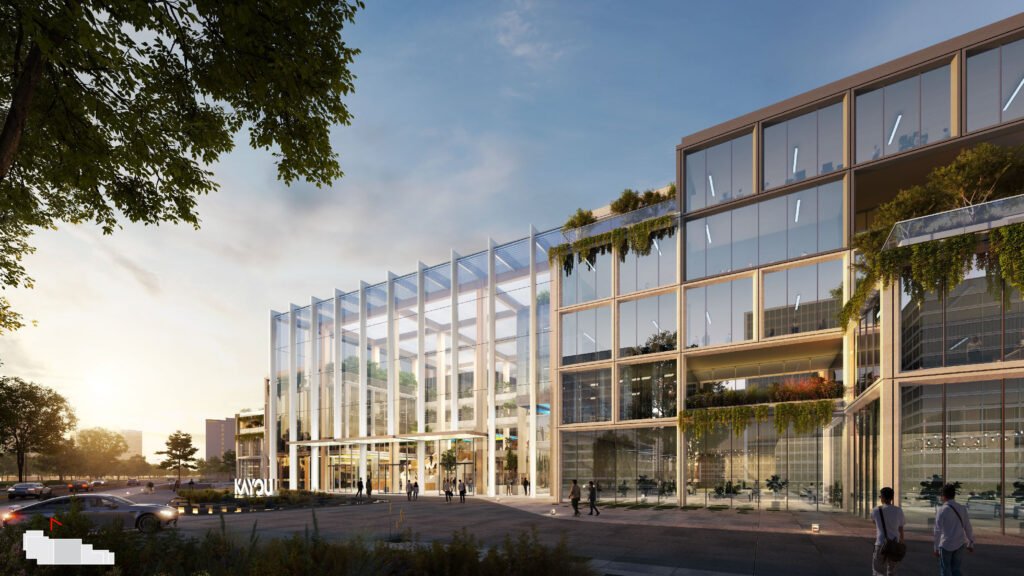
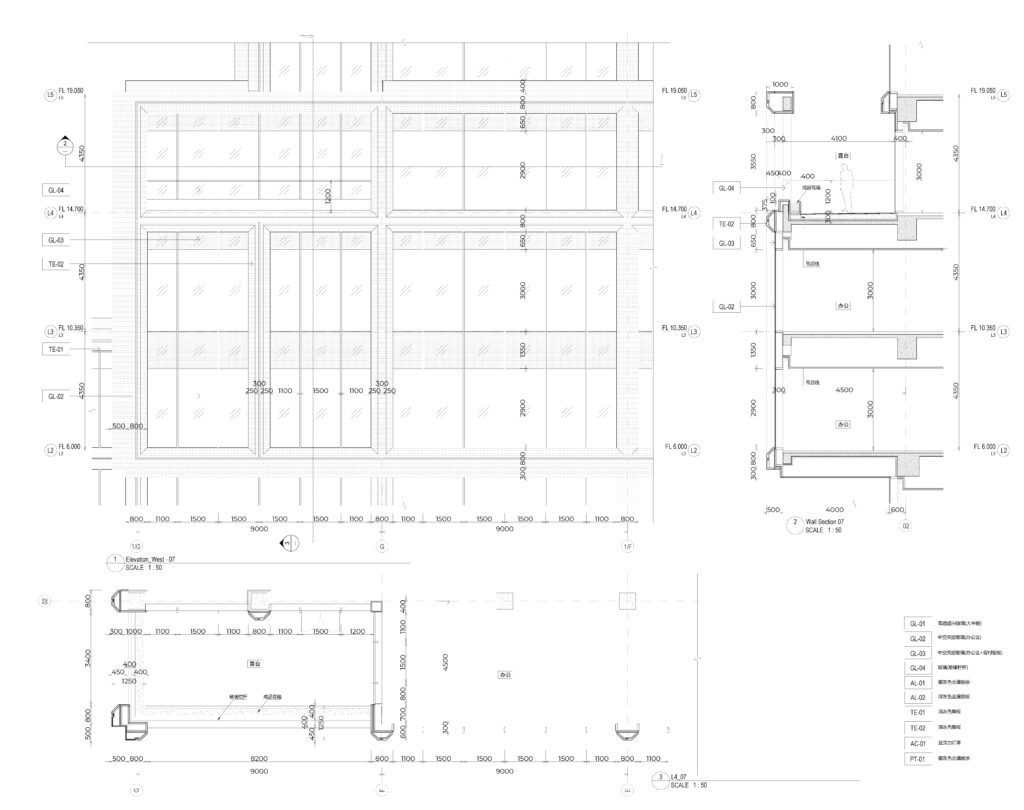
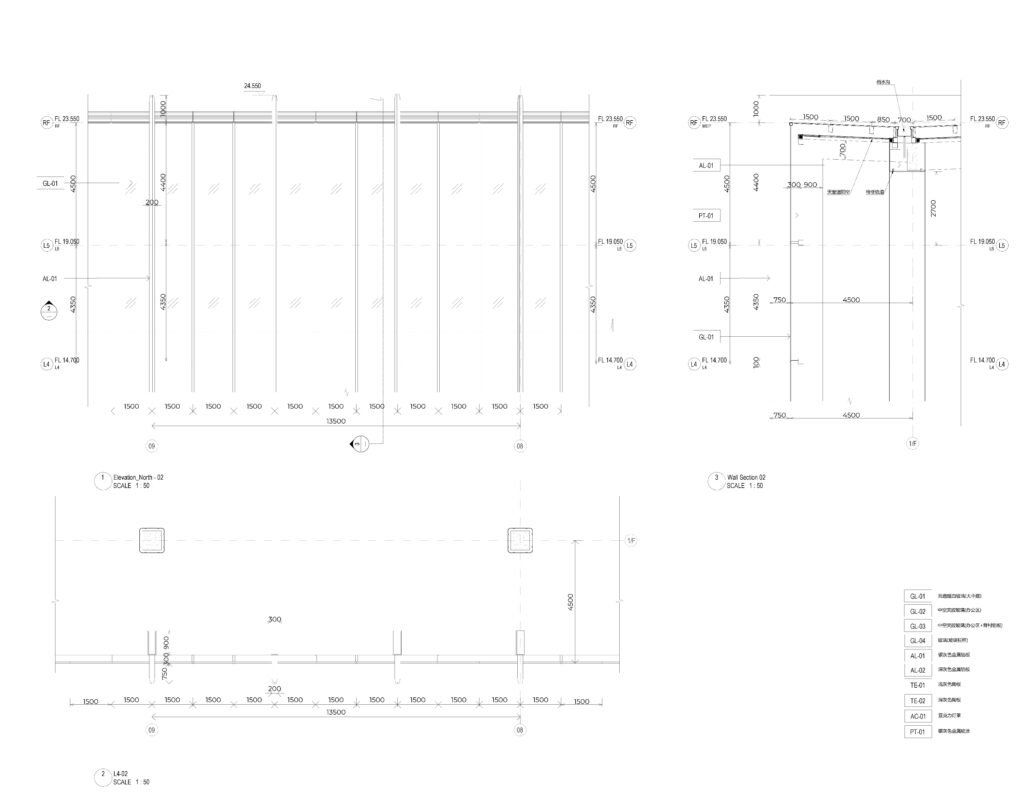
The building’s volumes appear eroded yet sculpted, with light cascading through the atrium and across the terraces, blurring the boundary between inside and outside. The vegetated terraces and green roofs provide passive cooling and visual continuity with the forested hills, reinforcing the sense that this is an architecture both of and within nature.
A Symbol of Creative Innovation
The Kaihua R&D and Exhibition Center embodies the client’s dual identity: a leader in high-tech manufacturing and a powerhouse of global pop culture. More than a workplace, it is a creative incubator and brand landmark, where science, storytelling, and design converge.
By merging natural inspiration, digital design exploration, and sustainable principles, the design demonstrates how architecture can reflect both place and purpose—bridging the tangible and the imaginative.