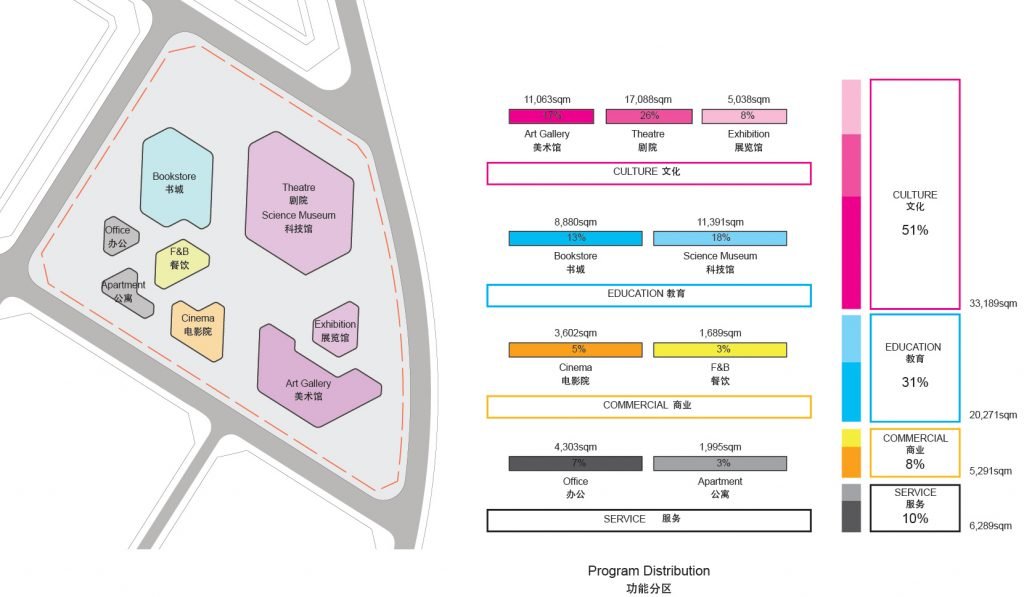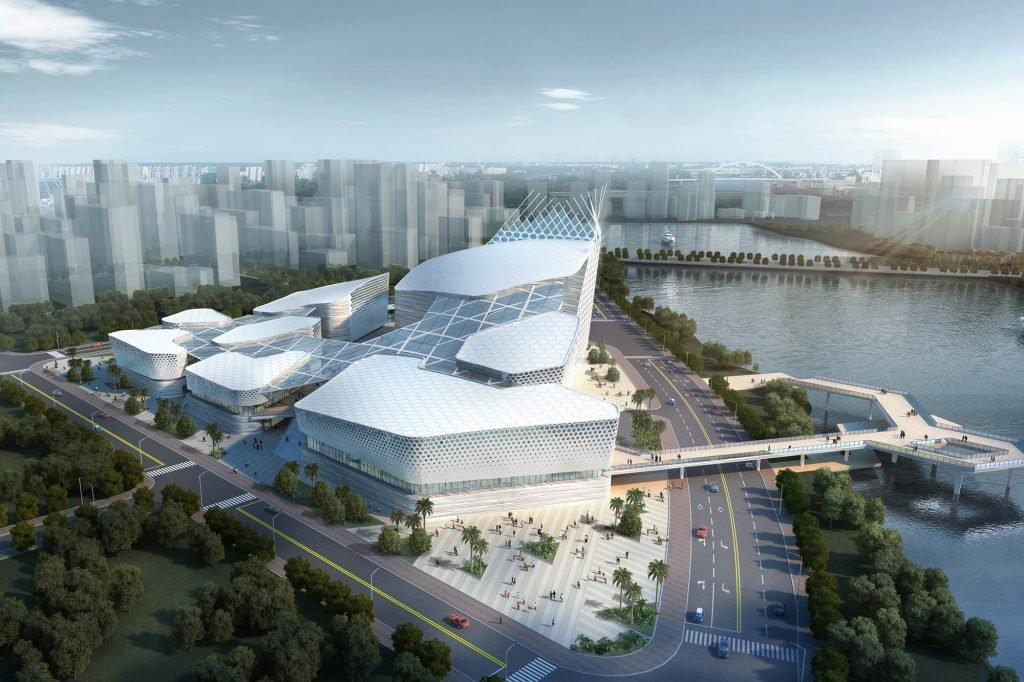
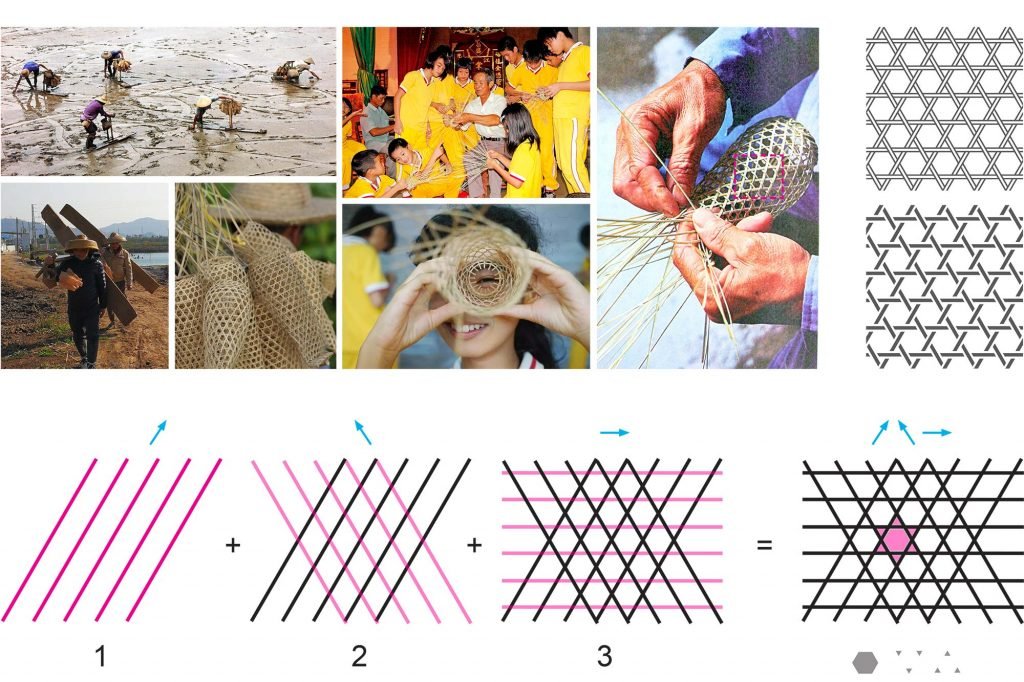
In Zhuhai, MUDI and MLA+ collaborated on an architectural concept that celebrates the beauty of local traditions while envisioning a new cultural landmark for the city. Awarded second prize in an international competition, the proposal draws inspiration from the traditional Southern China mud-fish traps—hand-woven artifacts that embody craftsmanship, geometry, and cultural identity.
A Concept Rooted in Local Craft
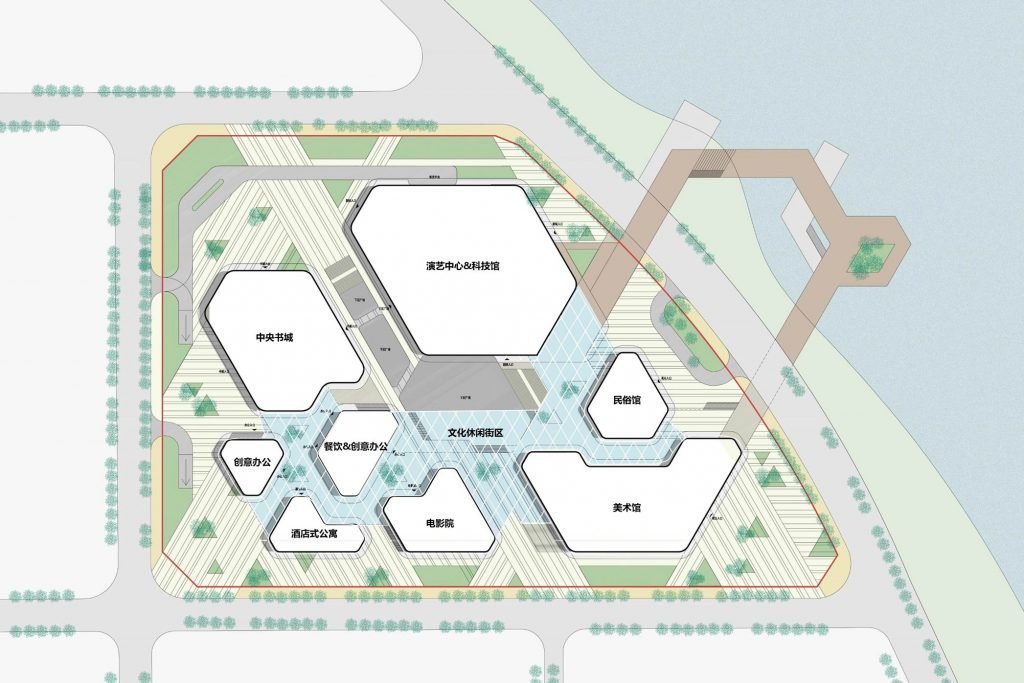
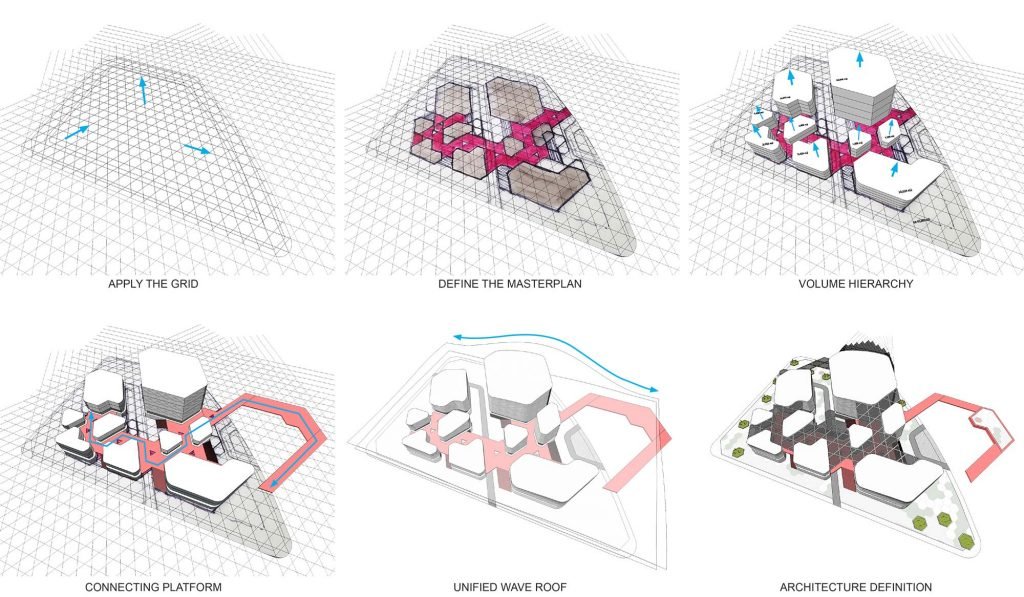
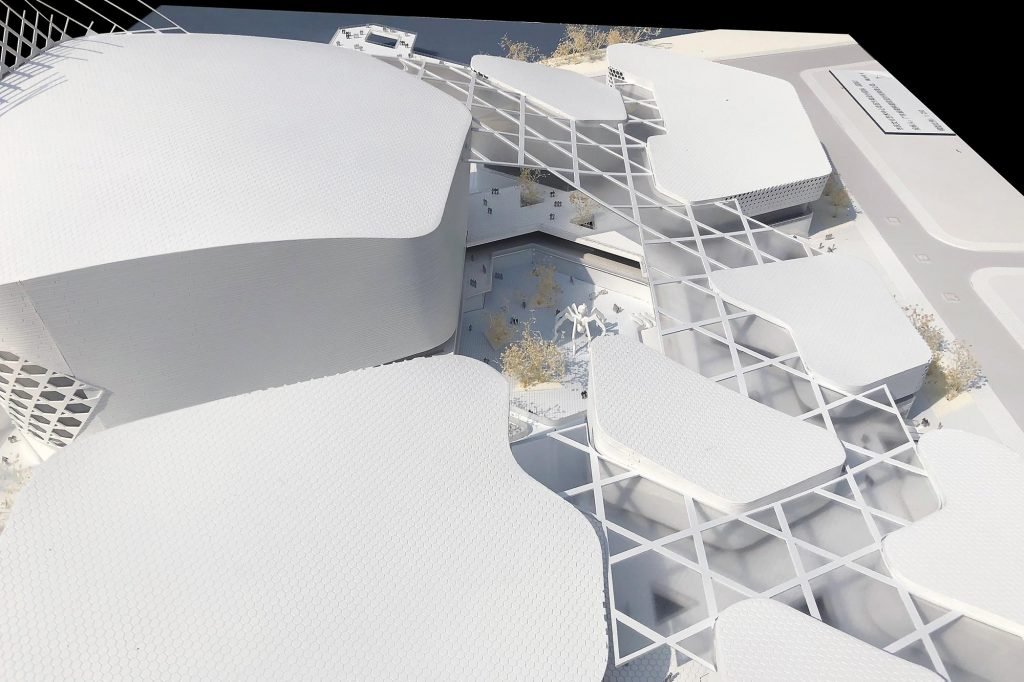
The mud-fish traps are constructed by interweaving two diagonal fibers with a third horizontal one, creating a distinctive pattern of hexagons and triangles. This elegant geometry became the foundation of the entire design. The grid defines not only the master plan layout but also guides the footprint of each unit, the landscape composition, and the elevated platforms that weave the project together.
Spatial Organization and Circulation
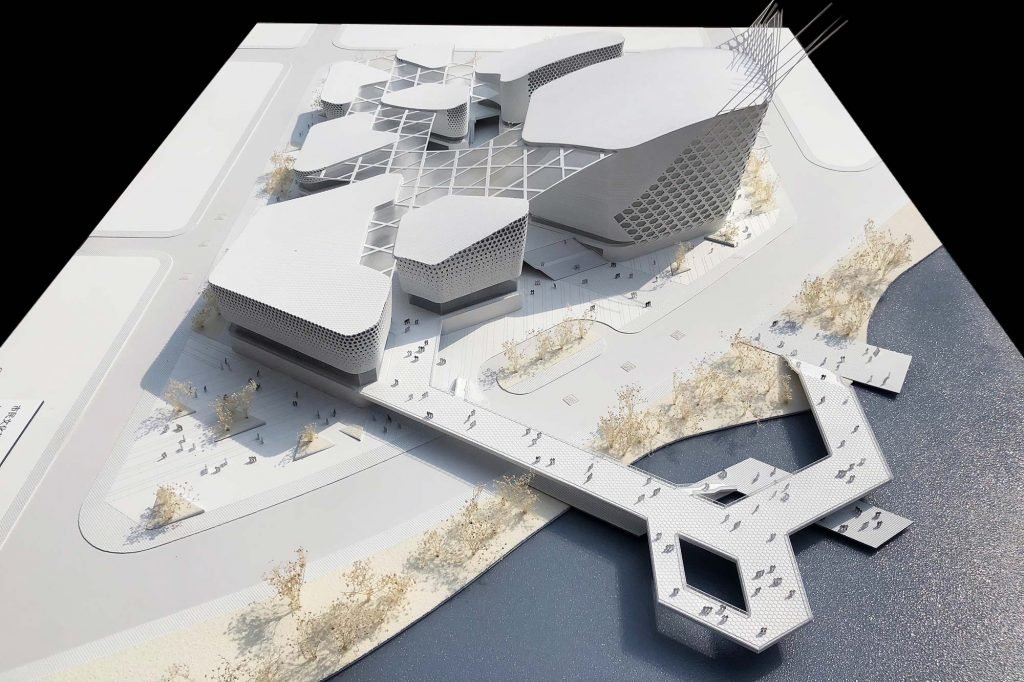
The complex is organized into three levels of public circulation, each tailored to a specific user experience.
- The semi-underground level provides access to the car park and supports service functions while remaining open to natural light and air.
- The ground floor, forming the heart of the commercial layer, features retail and restaurant spaces that open directly to the main public streets and plazas.
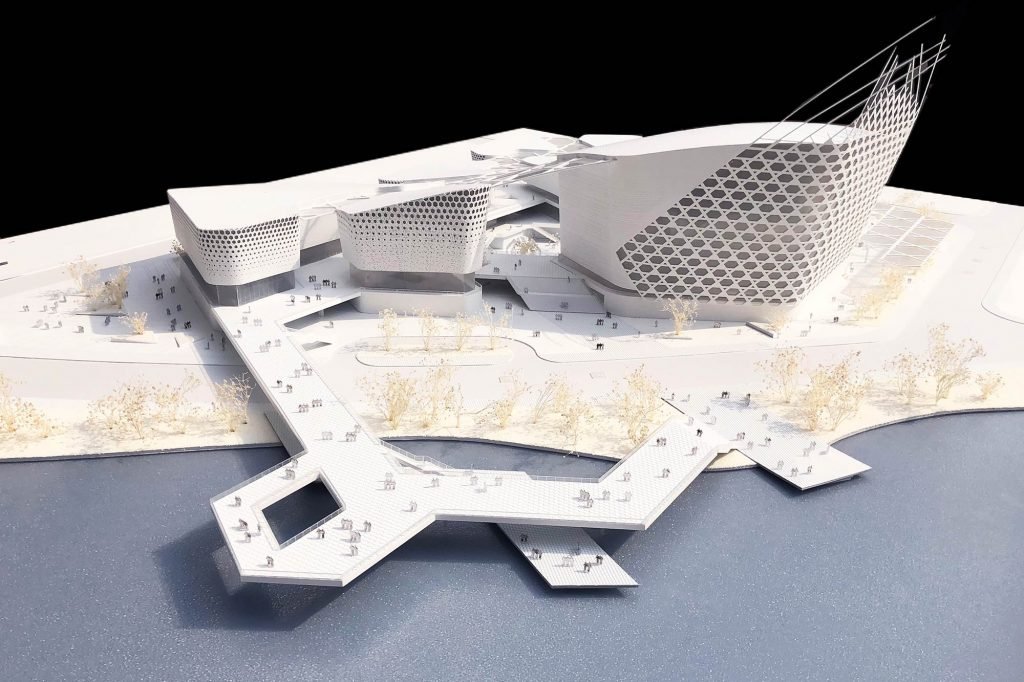
- The second level introduces a network of elevated walkways leading to the art exhibition halls and performance spaces, connecting cultural facilities through a dynamic elevated promenade.
To ensure full integration with the urban context, an elevated pathway extends across the adjacent road, linking the complex directly with the riverside landscape, inviting pedestrians to flow seamlessly between city and nature.
Materiality and Facade Design
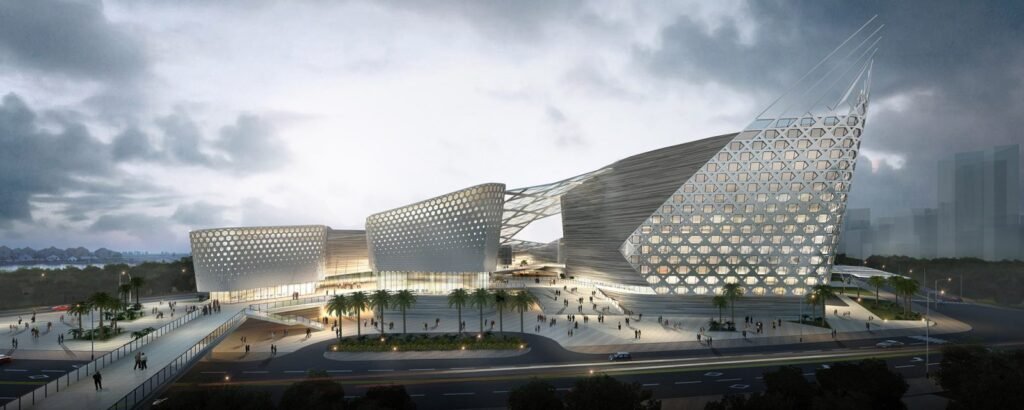
The design’s geometric inspiration extends to the building envelopes. The recurring hexagonal and triangular motif punctures the main facade and defines the glass canopy shading the complex’s southern edge. Natural stone cladding contrasts this lightweight pattern, emphasizing the sculptural composition of the volumes.
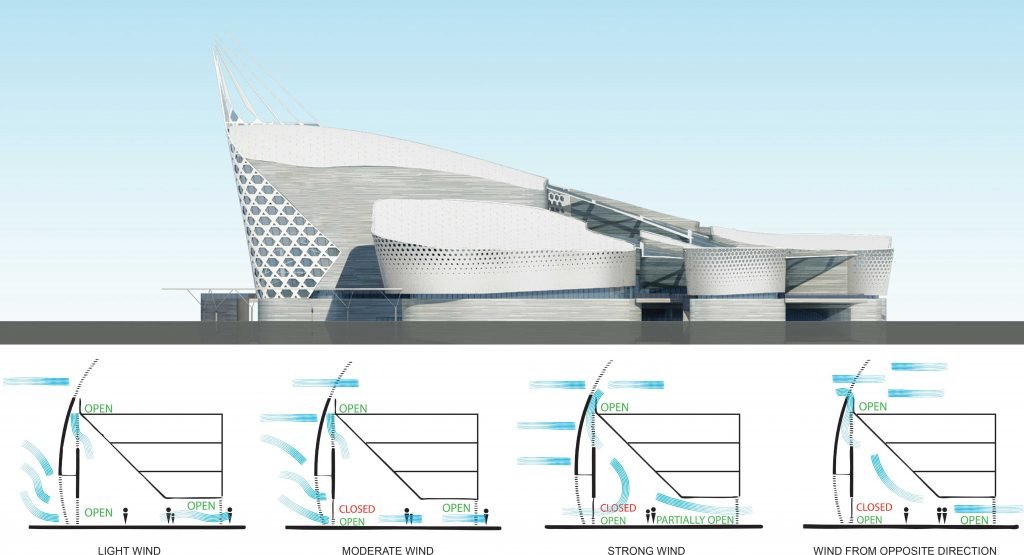
The Theater Building—the complex’s centerpiece—features a second-skin facade, reinterpreting the woven net pattern as an architectural screen. This layer not only reinforces the cultural narrative but also performs a crucial environmental function: the south-east facade shields the interior from strong winds and storms, while the north-facing sides remain open, transparent, and therefore, naturally ventilated toward the central plaza.
The covered plaza itself is designed without sidewalls, ensuring continuous cross-ventilation and maintaining a comfortable microclimate, avoiding excessive heat while promoting openness and accessibility.
Recognition and Jury Comments
MUDI and MLA+ were honored with the second prize in the competition, which was ultimately won by the Shenzhen Harbin Design University Institute. The jury commended the project for its strong conceptual clarity, contextual sensitivity, and architectural elegance, describing it as “a successful combination of a powerful concept rooted in Zhuhai’s culture and a convincing design expression.”
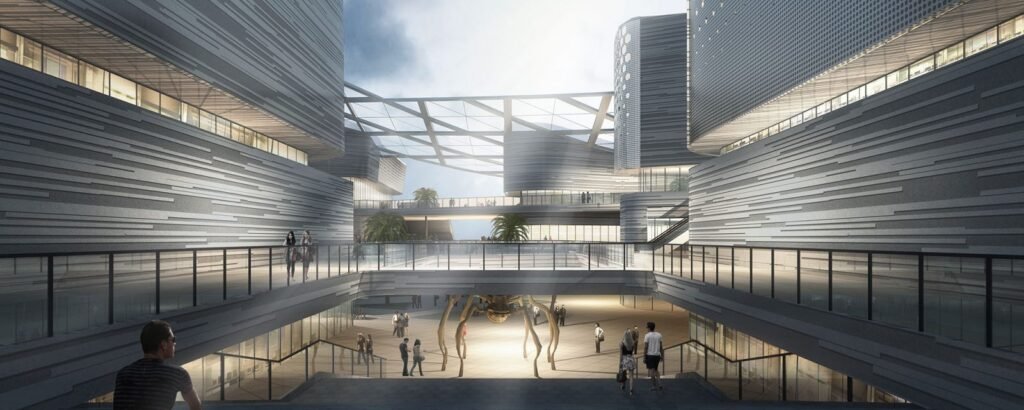
The Zhuhai Cultural Complex demonstrates how local heritage can inform contemporary design, bridging past and future through innovation. By translating the craft of traditional fish traps into an architectural language, the project proposes a cultural hub that is both contextual and forward-looking—an emblem of how modern cities can celebrate identity while embracing progress.